Industrial 3D Scanning in the Automotive Sector


3D scanning is being used in the automotive industry with numerous benefits. Accuracy, quality, and speed can’t be overlooked when it comes to car production. These factors impact user safety, efficiency, and customer satisfaction. Here’s what you should know about industrial 3D scanning in the automotive sector:
Reverse Engineering
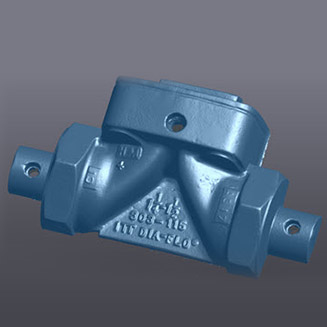
In the automotive industry, reverse engineering plays a crucial role. Reverse engineering allows for spare parts reproduction and replacement to become an easier task, especially when it comes to vehicles that have been discontinued and no longer have parts available on demand. Reverse engineering can help reproduce these parts accurately. Reverse engineering also plays a role in helping to improve designs.
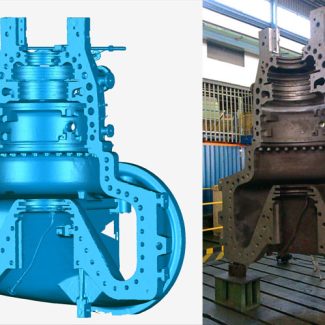
In turn, this can lead to improved durability, cost, and performance. 3D scanning plays an important role in reverse engineering in the automotive industry by creating accurate digital replicas of physical components. Using 3D scanning for reverse engineering can capture intricate surfaces of car parts that may be impossible or extremely time-consuming for someone to do by hand with traditional tools.
Safety Analysis
Automobiles are heavy, powerful, and potentially dangerous machines. This is why it’s critical that they are as safe as possible throughout their lifetime. 3D scanning can help with the safety of vehicles by determining absorption zones, measuring deformation, and even reconstructing accidents. 3D scanners can be used in real-world accidents to access vehicle damage, document scene geometry, and pinpoint impact points.
Understanding how crashes affect vehicles helps the automotive industry to better design them for the safety of consumers. 3D scanning can also help to determine how vehicle components such as bumpers and doors behave under stress, which matters during accident impacts. 3D scanning in the automotive industry can help to improve safety design, accurately assess damage, and provide digital evidence of compliance for regulatory support.
Improved Car Assembly
Car assembly is important as a safety measure but involves so much more. With 3D scanning, fit and alignment of car parts becomes more precise. 3D scanning can verify that car parts such as hoods, bumpers, and doors fit correctly as it can detect gaps, warping, and misalignment. If this can be done before assembly, such as with 3D scanning, time and money can be saved.
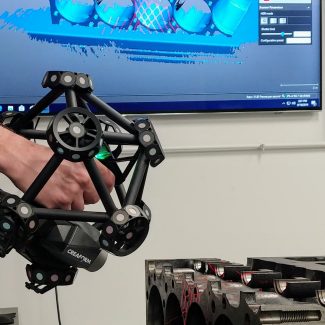
Quality control is also improved by detecting surface defects such as dents and scratches. An assembly line that uses a robotic arm with a 3D scanner can scan each dashboard to make sure that each button and vent is properly placed. Older vehicles can be retrofitted with parts thanks to 3D scanning. Not only can older, no-longer made parts be recreated, they can be made to fit perfectly into the existing space.
Industrial 3D scanning is benefitting the automotive industry by focusing on precision, safety, and overall quality. With 3D scanning, car manufacturers can gain a competitive edge over the competition and improve their brand reputation.