How to Design Products with Manufacturability in Mind

The perfect product idea doesn’t always translate into a successful product. The difference between concept and reality can come down to one thing. The manufacturability of your designs. Your product might look perfect on screen and it also might function well in its prototype phase. If it is difficult to build or expensive to produce at the scale you need for full production, it will have a harder time being successful.

Designing with how your product will be manufactured in mind at the start will save time and actually increase the chances that your product will eventually make it to potential customers. Here’s how to approach product design with manufacturing realities baked into the process.

Start with Material Selection

The materials you choose have a huge impact on how a product gets manufactured in the end. Different materials could require different processes and different tools you have to work with. Consider the materials you are using in your designs as early in the process as you possibly can. As a few examples, think about the strength requirements, weight constraints and environmental conditions the product will face as well the cost of actually using those materials. By understanding the tradeoffs from the beginning, you can design within whatever constraints your chosen materials have instead of discovering limitations after work gets done.

Simplify Part Geometry

Complex geometries can showcase impressive design skills. But with complexity, you could create manufacturing headaches. Intricate designs and internal features can drive up production costs or require specialized equipment.
Look for any opportunity to simplify your design without sacrificing its actual function. Sometimes a small change in the geometry of your product makes all the difference. It could change from one that requires expensive machining and one that can be produced on standard equipment. The simpler the geometry, the more manufacturing options you’ll have available.

Minimize Part Count

Every additional part in an assembly means more components to assemble. It means more potential points of failure and more possible complexities in your supply chain. Wherever possible, try to consolidate on parts.

More modern manufacturing techniques like 3D printing allow you to create more complex single piece designs then were possible in the past. Even with what are considered traditional methods, thoughtful design can reduce part count. Fewer parts mean lower costs, faster assembly, easier quality control and when everything is said and done, you have a more reliable product.

Think About Assembly

Even the most simple, manufacturable parts can create problems if they prove difficult to assemble. Remember to design parts that fit together easily. Consider how assembly workers or automated systems will handle and join components.
Ask yourself these questions. Can parts only go together one way, preventing errors? Are fasteners accessible? Does the assembly sequence make sense?

Plan for Inspection and Quality Control

Your design should have parts that meet quality control specifications. Quality control is something that becomes challenging and expensive.
Think about how manufactured parts will be inspected. Make sure that key features are easily measurable, make sure to have visual indicators that assembly was done correctly. Build inspection considerations into your design. These all help ensure consistent quality without adding unnecessary verification steps.

Prototype with Production Methods

Prototyping in the same ways you will use for production can help reveal manufacturing issues early on in your process. A prototype that gets made through a completely different method might work for now. But it tells you nothing about how the design will translate to the manufacturing method you intend to use for the final product.

Whenever you can, create prototypes using production processes you will actually use in your final. This confirms not only that the design works functionally, but that it can also be actually manufactured in your intended way.

Designing for manufacturability shouldn’t hinder your creative process. It should be able to channel creativity in directions that lead to products that can actually be made well, affordably and consistently. The best designs will be able to balance innovation with manufacturing reality. This will help a product do well in the market.

Like this post? Share below..

Role of Market Fit in Successful Product Development

Launching a new product is an exciting part of having a business. However, there are a lot of steps involved to the process. Sure, it’s important to have a great idea, but there’s a lot that must happen after it.

One of the biggest hurdles is that on the surface, an idea could look great, but over time, companies may realize that there are no customers who want the product. In this case, assessing market fit is the missing piece of the puzzle.

Understanding Market Fit

Market fit is a term used to describe the alignment between a product and the needs of its target audience. A product with strong market fit provides a solution that customers genuinely want, use, and recommend. Yes, this does require technical feasibility, but it also means that companies need to do research concerning customer pain points, preferences, and expectations.

The process often begins with key questions: Who is the target user? What problem does the product solve for them? How does it compare to existing alternatives? By answering these questions early, companies can reduce the risk of investing heavily in a product that fails to resonate.

Design With the End User in Mind

One of the most effective ways to achieve market fit is to prioritize the end user throughout the design and development process. This is something that a lot of businesses miss in the design process. This includes incorporating customer feedback at early stages, building prototypes, and using renderings or mock-ups to test assumptions before full-scale production, so it’s a comprehensive process that requires oversight. 

When products are designed with user experience at the forefront, they are more likely to be intuitive, useful, and appealing. Early validation also helps identify gaps, refine features, and ensure that what is ultimately launched into the market has been shaped by the people who will use it.

Balance Practical Restraints

While designing for users is essential, successful product development also requires balancing cost, manufacturability, and scalability. A product that addresses customer needs but is too expensive to produce or too costly for customers to purchase will struggle to succeed. Similarly, designs that are difficult or inefficient to manufacture may never make it to market.

Techniques such as 3D modeling, prototyping, and engineering analysis can help ensure that the final product is both functional and viable. By balancing user needs with practical constraints, companies can create products that are not only desirable but also realistic to bring to market.

Market Fit Creates a Competitive Advantage

Products that achieve strong market fit enjoy significant advantages. They are adopted more quickly, create stronger customer loyalty, and generate better returns on investment. With the right alignment between design, functionality, and customer demand, products can differentiate themselves in crowded markets and sustain long-term growth.

Companies that consistently prioritize market fit position themselves for greater success across product lines. Instead of simply developing what is possible, they deliver what is valuable.

At Celero Partners, we understand that designing for manufacturability and cost is only half the equation. You need to ensure that your product aligns with real customer needs is what ultimately drives growth and long-term success. For more information about this, please reach out!


Like this post? Share below..

Why You Should Consider Local Product Development

It’s important to understand the importance of local product development in today’s globalized market. Local product development allows you to tailor products to the needs of customers that you understand best. Developing products close to home offers many unique benefits that go beyond mere convenience. Here are some reasons why you should consider local product development:

Improved Market Insight

When you develop products locally, you benefit from having firsthand knowledge of the customers you are serving. You understand their needs, behaviors, preferences, and the trends they follow. Preferences, for example, can vary greatly from region to region. Development teams have the ability to foster close relationships with suppliers, distributors, and customers. Lead times will be shortened and forecasting will be improved. Products that are created with customization in mind will lead to stronger brand loyalty.

Faster Time-to Market

When products are manufactured locally, close to the target market, you are able to reduce shipping time, which is important to consumers. They don’t want to have to wait days, weeks, or even months to get their hands on your product. When you produce items locally, you can also respond to changing trends much more quickly. This helps your company to stay competitive and top-of-mind in your target market.

Improved Quality Control

Being closer to where your product is being developed means that you can do more frequent inspections and real-time monitoring. If issues happen to arise, you can intervene more quickly than if the product is being developed far away. This not only saves you time, but money as well, which is important to your bottom line. It can also impact the trust your customers have in you. Being able to catch issues before they get to the consumer is crucial. In addition, the relationship between you and local suppliers will be strengthened, which can lead to better adherence to standards that create quality products.

Better Supply Chain Resilience

When products are developed locally, the supply chain becomes more resilient because the dependence on long global supply routes is no longer required. Global supply routes are vulnerable to shipping delays, natural disasters, and even geopolitical conflicts. When the manufacturing of your products is closer to home, the end market, your company has better control over inventory and can respond to issues in a more timely manner. Your supply chain is less at risk of customs delays and transportation issues when you develop products locally.

Choosing to develop products locally holds numerous benefits, not just to your company but also for your customers. By producing locally, you can streamline the production process, reduce lead time, and offer products that meet quality standards. This will enhance customer satisfaction overall. Local product development will also help to foster a deeper connection between your community and your company.

The advantages of local product development go beyond convenience and efficiency. You are building customer trust and loyalty. Local product development is your key to long-lasting success.

Like this post? Share below..

Common Product Design Mistakes and How We Avoid Them

At Celero Partners, we know how important a properly designed product is. Unfortunately, we’ve seen that even the best of ideas can be held back or not live up to their potential if the design is poor or flat at is filled with mistakes. No matter what kind of business you have, there are some common design issues that are worth avoiding. Here’s a look at some of the most common:

Designing Without Manufacturability in Mind

A great design that can’t be affordably or efficiently produced will struggle to succeed. We know this to be true because we’ve seen it so many times. One of the biggest pitfalls we see is over-engineering—where parts are too complex, materials are poorly chosen, or tolerances are too tight.

At Celero Partners, we integrate design for manufacturability (DFM) principles from day one. We evaluate material selection, assembly processes, and cost-drivers early, ensuring your product is not only functional but feasible to produce at scale.

Ignoring the End User

It’s easy to get caught up in features or the way a product looks and forget usability. A product may function flawlessly and look great in theory, but if it’s uncomfortable to use, unintuitive, or doesn’t solve the user’s real problem, it won’t thrive. Our approach includes human-centered design.

We consider ergonomics, context of use, and real-world conditions during the development process. Through prototyping and feedback loops, we test and refine the design to ensure it works for the people who matter most – your customers.

Skipping Prototyping or Testing

Another major issue when designing products lies in skipping or rushing through prototyping and validation. This leads to expensive surprises down the line. Celero Partners offers in-house 3D printing and rapid prototyping services to bring your product to life quickly and cost-effectively.

With functional prototypes in hand, we test for fit, performance, durability, and user interaction before committing to production. This drastically reduces risk and speeds up development cycles.

Lack of Integration Across Teams

When product design is siloed from engineering, manufacturing, or marketing, miscommunication leads to delays and rework. Our strength at Celero is our cross-functional experience. From 3D modeling and automation to tooling and scanning, our teams collaborate across disciplines to provide integrated, solution-oriented thinking. We don’t just solve one part of the puzzle—we align every piece.

Not Planning for Scalability or Evolution

Many products are designed to work “just for now,” with little thought to future improvements or scaling. We keep this in mind from the beginning because we help you think ahead to the future. Do you need there to be room to grow? This should be solved for in the initial product desigs if that is the case. This will prevent needing to do full redesigns in the future.

At Celero Partners, our goal is to accelerate your growth and help you create the best product possible. We really listen to your needs and make sure you are happy with the design without making the above common mistakes.

Do you need help with product design done the right way? Let us help you! Be sure to get in touch to talk with our experts.

Like this post? Share below..

Role of User Feedback in Product Development

At Celero Partners, our clients’ needs and satisfaction are our priority. We specialize in product design and development. To best meet your needs, we focus on product cost, manufacturability, and how products will fit into the market. A crucial part of product development that cannot be overlooked is user feedback. Here’s what you should know:

Understanding Pain Points

Pain points are areas that users find difficult or frustrating. During product development, it’s important to listen to the pain points that users have when interacting with a product. Creating a successful product means meeting the users’ needs and expectations. Using user feedback helps to eliminate decision-making and options that aren’t a good fit. When pain points are taken into consideration, the quality and usefulness of the product goes up. User feedback can be helpful in the areas of usability, customer service, and pricing.

Understanding and adjusting products through listening to user feedback helps us to create better products that perform better in the market. At celero, our goal is to help you create high-quality products that will do well in the market and lead to your success.

Increasing Customer Loyalty

Users of products want to feel seen and heard. By understanding the user’s needs, we can improve product development by focusing on what matters to them. There is no second-guessing because they’ve told us exactly what they want. Taking the user’s feedback into consideration and implementing changes to the products creates customers that are more likely to be loyal. Building trust is an important part of increasing customer loyalty.

Communication plays a large role in customer loyalty. It’s one thing to read the feedback given by users and implement it, but communicating with the users will take it to another level. You want users to know you are paying attention and that their time and feedback matters. By creating a line of communication, customer loyalty goes up.

We also offer free initial project consultations that help us get to know you and your needs better.

Generating New Ideas

User feedback not only helps us improve on one customer’s product. We can use the information we get to create new functionalities, features, and brand-new products. Customer feedback is one of the best tools we must improve the overall performance. We are always open to learning and implementing the tools that will provide our customers with what they deserve – the best products.

Staying ahead of the curve is important. We keep up with industry trends and offer the latest technologies to ensure our products remain relevant. By combining the latest technologies and the feedback from our clients, we know we have a winning combination.

User feedback is an important part of business. At Celero Partners, we understand that customers come first. Our goal is to provide the best products possible that align with customer preferences as well as the needs of the market.

Like this post? Share below..

How Strategic Planning and Execution Works for Product Design and Development

If you’re looking to launch a new product, the first step is to establish a strategic planning and execution process. This process will serve as a roadmap, helping you align your products with customer preferences, market trends, and brand objectives. It will also ultimately lead you to the overall vision of your product and a successful launch.

That’s why, in this article, we’ve explained how you can incorporate strategic planning into your product design and development project. Here’s a look at the importance of strategic planning in product design and development:

Reasons to Implement Strategic Planning

So, why should you implement strategic planning? Here are some good reasons:

Improves Customer Satisfaction: Strategic planning allows you to align your product features with customer needs. It develops a product that solves customer problems or adds value to their life, thus contributing to customer experience.


Builds Stronger Brand Identity: A well-executed strategy can also impact your product and brand design. You’ll be able to create a unique identity that sets you apart from the competition and fosters recognition among your audience.


Provides Competitive Advantage: Strategic planning often urges the individual to research various topics, such as industry trends, unique selling points, customer behaviors, etc. Knowledge of these topics gives businesses a competitive edge over competitors.

Key Stages to Creating a Strategy

So, what does a strategy for product design and development typically look? Here’s an overview of what to expect:

Idea Generation

This is the initial stage where creative and innovative brainstorming is involved. The goal is to compose a diverse range of concepts that can eventually be developed into a functional product. You can draw inspiration from multiple sources like customer pain points, expertise from within your business, similar existing products, etc. It also helps to cultivate ideas that align with your company values and brand identity.

Market and User Research

The next stage involves gaining insight into customer expectations and current trends. Analyzing this information can help solidify your product concept into something that aligns with customer needs. So, for analysis, you must gather data through customer surveys, interviews, and focus groups, as well as research relevant market trends.

Prototyping

Once you’ve prepared a solid design for your product, it’s time to bring it to life through prototyping. It’s recommended that several prototypes be built while making significant changes to the original idea. However, the goal should be to create a minimum viable product (MVP) the most basic version of the product, that includes only necessary features.

Testing and Validation

After developing the MVP, you must thoroughly test its usability, functionality, and design. This is an important step, so that you can discover failures before a product launches. So, before the final launch, make sure to have a beta group test the product and validate its quality.

Launch and Post-Launch Activities

Now’s the time to finally launch your product and introduce it to the market. Have a marketing team garner interest in the product through promotional efforts and distribution tactics. After the launch, it’s also vital that you monitor the product’s performance through customer feedback. This is so you can keep an eye on any necessary changes or improvements that need to be made to it.

Effective strategic planning and execution are vital for a successful product design and development project. It can help build a stronger brand identity, improve customer satisfaction, and offer a competitive edge. Be sure to contact us for more information!

Like this post? Share below..

Role of User-Centered Design in Product Development

Product development is not just about building something functional. Its success lies in creating a product that resonates with its users and aligns with their needs. That’s why user-centered design (UCD) is a widely preferred approach to product development, as it focuses on designing with the user in mind. Here’s more information:

Get to Know User-Centered Design

User-centered design in product development prioritizes users throughout the entire design process. In this approach, you need to have a better grasp of your customers’ needs, desires, and behaviors and then implement them into your product design. As a result, you’ll create something that users find enjoyable and easy to navigate.

UCD is primarily based on a set of principles that drive your design towards a successful, user-centric product. Some of the main principles include:

Empathy

As mentioned before, UCD requires you to see things from a user perspective and build your product around it. This way, you can create something that aligns with their expectations and solves their problems.

User Research

This involves gathering insights into users’ preferences through interviews, surveys, and feedback. You can uncover customer pain points and opportunities for innovation, thus allowing for more informed decisions on product design.

Usability

This is about creating products that are easy to use and navigate. It’ll allow users to accomplish their goals easily and without delay or frustration.

Reasons to Implement UCD in Product Development

Here are a few reasons why you should implement UCD in your product development process:

Improves User Satisfaction

Since UCD relies purely on the customer’s needs and preferences, it naturally leads to higher user satisfaction. In turn, satisfied users are inclined to engage further with the product, build loyalty to the brand, and offer positive feedback. However, this is only possible if designers conduct proper research and create something that truly resonates with their market audience.

Encourages Product Adoption

Product adoption is when a potential customer hears about your product, tests it out, and ultimately becomes a regular user. However, this solely applies to products that are easy to use and navigate. If users can’t easily navigate your product, it’s less likely they’ll return to it.

Reduces Development Costs

During the final stages of product development, the result often falls short of the user’s needs and expectations. Designers will then have to invest additional resources to recreate the product and address any deficiencies in the design.

That’s why it’s best to implement UCD early on in your product development process. You’ll be able to address potential design flaws, avoid expensive recreations, and have a final product that aligns with user expectations.

Incorporating UCD into product development can make significant contributions to the result of the product and how it’s received. For more information, please get in touch.

Like this post? Share below..

Using 3D Scanning Services for Product Design

It is true that 3D scanning has made its way through several industries. Product design has only been simplified with its services. Companies looking to develop their product have quickly made themselves familiar with the various uses and countless benefits of 3D scanners.

In this article, we will explain how 3D scanners have revolutionized various industries and the common benefit of implementing them in your product.

What is 3D Scanning?

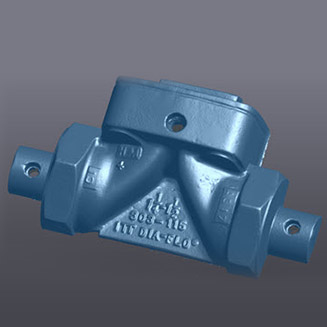
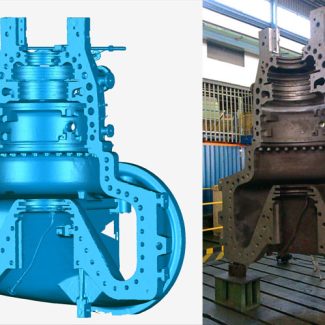
3D scanning is the process of generating a digital representation of a physical, real-world object. This process includes a scanner that evaluates the object’s size, shape, and appearance. Then, with this data, manufacturers can use the 3D digital models to reconstruct, analyze, and stimulate new ideas.

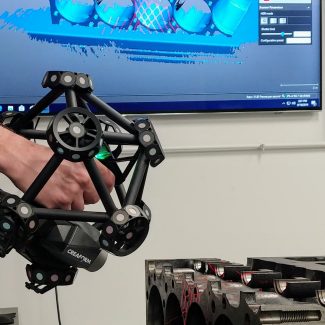
3D scanners use lasers to measure the surface of an object. The beams sweep over its fine details and free-form shapes, generating quick and accurate results. It can garner precise measurements from even the most complex geometrical forms, which most traditional methods struggle with.

Applications for 3D Scanning

The following are the various ways industries have benefited from 3D scanners:

Automotive

With the help of this technology, designers can scan entire vehicles, including their components. Designers use this opportunity to customize and refine digital models before creating a physical prototype. They can also use digital models to conduct security tests and simulations to ensure the vehicles meet safety standards.

Medical and Healthcare

3d scanners can capture anatomical measurements like the shape and dimensions of a person’s bones and joints. These measurements are then used to create customized implants and prosthetics that fit the patient comfortably. It’s the perfect substitute for common ill-fitted prosthetics that can be uncomfortable.

Construction and Architecture

Architects use 3D scanners to document detailed measurements of existing buildings and structures. This allows them to plan renovations and incorporate new designs on old structures. These scanners can also map out entire landscapes and construction sites to better visualize the placement of their project in 3D.

Entertainment and Gaming

3D scanners are significant in the entertainment industry for creating immersive virtual environments, characters, props, etc. These scanners are often used to analyze an actor’s facial features, including their various poses and expressions. Designers will also replicate real-world objects for props, sometimes even adding customizations and details to the model.

Benefits of 3D Scanning for Product Design

Here are the many ways your product can benefit from using a 3D scanner:

  1. Accuracy and Precision: 3D scanners ensure the digital model perfectly resembles the actual physical object. It eliminates the concern for errors and miscalculations associated with traditional methods.
  2. Reverse Engineering: 3D scanning your products also gives you the chance to reverse engineer them. This technique is useful when deconstructing and modifying an existing flawed product.
  3. Captures Complex Geometry: Manually collecting data on complex geometric shapes can be incredibly time-consuming and full of errors. 3D scanners overcome this obstacle with their sharp ability for precision and accuracy.
  4. Speed and Efficiency: Besides being precise in collecting data, 3D scanners can complete their scan in a matter of minutes. This allows you to streamline operations and stay on track with your projects.
  5. Digital Prototyping: Instead of wasting resources on faulty physical prototypes, 3D scanning can help digitally refine your products. Any alterations and modifications can be made on screen before the actual prototype is produced.

3D scanners have become a common commodity in several industries, including entertainment, medicine, architecture, etc. With so many industries relying on it, it’s clear that this device is not without its benefits. 3D scanning captures data with sharp accuracy, provides opportunities for reverse engineering, and presents the measurements at quick speeds. Contact us for more information.

Like this post? Share below..

Benefits of 3D Scanning for Product Design

In the growing landscape of prototyping and product design, 3D scanning has transformed the way we bring our ideas to life. Its genius lies in scanning physical objects and converting them into digital models. It may not seem like much, but with an annual growth of 5.7%, this technology has taken over the product designing process.

Read on to find out about a few of the countless benefits of implementing 3D scanning to help design and modify your product.

Precision and Accuracy

One of the main benefits 3D scanning has to offer is the amount of precision and accuracy in its measurements. It’s a major step up from manual tools like measuring tape or calipers. Since they rely on manual handling, these tools will always be prone to measurement errors and limitations.

In contrast, 3D scanners can capture even the microscopic details of a product with zero shortcomings. This level of precision is detrimental in various industries, like engineering, medical, aerospace, etc.

Experiment With Design

With 3D scanning, people can experiment with their designs without reconstructing the actual product. Once it’s scanned, the digital model of the product acts as a canvas, giving designers the opportunity of unrestricted creativity. They can experiment with the shape, size, and different features of the digital product.

This kind of flexibility allows for the exploration and innovation of designs that don’t usually come with traditional methods.

Reverse Engineering Capabilities

3D scanners are the perfect tool for reverse engineering an existing product. After digitizing the product, designers have the free reign to dissect the product and gain insight into its design. This is especially useful in understanding products with intricate mechanisms and complex structures.

Designers can also use this opportunity to improve on existing products. They can easily work to make the product better or fix issues in the original design.

Quality Control

Quality control is vital when it comes to product manufacturing. Without it, there’s a great chance of creating defective products that contradict with the original design. If the quality decreases, it could compromise the product’s functionality.

For this reason, a digital model of the original product would make a perfect blueprint for further manufacturing. Since 3D scanning captures the intricate details of a design, the digitized version would offer every specification needed to make the exact replica.

Handling Complex Designs

As mentioned before, traditional measuring methods can’t record accurate details of a design. When one is dealing with complex geometrical designs, it could lead to a great number of errors and inaccuracies.

3D scanning excels at handling complicated designs and unconventional shapes. It can capture various data points on intricate details, curves, and surfaces. The best part is that 3D scanners can take measurements without physically touching the product, reducing the risk of damaging the detailed surface.

The rise of 3D scanning has reshaped the process of product design. It offers designers opportunities for experimentation and reverse engineering. With the digital models, people can rely on the scan’s accuracy and need for quality control. 3D scanners are the perfect tool for bringing complicated concepts into reality.

Source:

https://www.marketvalueinsights.com/industry-reports/3d-scanning-market/353

Like this post? Share below..

View 3D Printing, Scanning and Product Development Case Studies:

Celero Partners Serves the Following Industries:

CASTING AND FOUNDRY
CONSUMER PRODUCTS
INDUSTRIAL
MANUFACTURING
MEDICAL

Our Partners:

Contact Us Below to Recieve a Custom Quote:

loading...