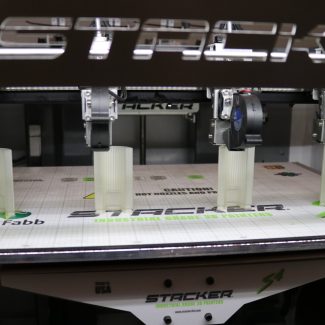
Why Clients Choose Celero Partners for 3D Printing and Design

The 3D printing and design landscape is crowded these days. You can find services ranging from online print farms that treat your part like just another number in the queue, to specialized shops that only handle one type of technology. So what makes someone choose to work with a particular partner for their projects? 

Multiple Technologies Under One Roof

Not every project needs the same solution. Sometimes you need the strength of carbon fiber reinforced prints. Maybe you need a quick concept model in standard materials, or perhaps you’re producing functional parts that will see real use.

Having the access to different 3D printing technologies that we provide matters. It means that we can match your actual requirements instead of forcing your project to fit whatever equipment happens to be available. You’re not stuck with one approach, the conversation with us starts with what you’re trying to accomplish and then figuring out the right technology to meet those needs.

Design Expertise That Goes Beyond Printing

Something that tends to happen is someone has a great idea. Then, the file they send isn’t exactly ready for printing. There could be various errors that stop us from immediately hitting print on the product. Working with a team that understands both design and manufacturing means these issues get caught and fixed. There’s a conversation about how to optimize the design for better results. Sometimes small changes make huge differences in print quality, strength, or cost.

From Prototype to Production

A lot of 3D printing services are set up for one-off prototypes and that’s it. But what happens when your prototype works and you’re ready to scale up? Starting over with a new partner means explaining everything again and hoping the production version matches what you validated with your first partner.

The ability to move from initial prototypes through into actual production with the same team creates product continuity. The people who helped you develop the part understand its history and its requirements. Whether you need ten parts or ten thousand, having that pathway available makes the journey smoother.

Problem Solving That Considers the Bigger Picture

Sometimes what someone asks for isn’t actually the best solution to their underlying problem. It is possible to be focused on printing when custom tooling or automation would be more cost effective long term. A partner with capabilities across multiple areas like 3D scanning, CAD design, automation and other manufacturing processes can look at challenges from many different angles. The conversation becomes about solving the actual problem rather than just fulfilling a specific service request. 

Understanding Different Industries

Manufacturing for casting and foundry work involves different considerations than medical device prototyping. Consumer products have different requirements than industrial tooling. Experience across the many different industries a client might need means understanding nuances.

When you’re working with someone who’s done similar projects before, less time gets spent on educating them about your project and more time gets spent on the actual execution. They understand why certain things matter in your specific application and can anticipate issues based on what they’ve seen in similar work.

Track Record and Reliability

Past performance matters. When someone has successfully delivered similar projects before, you’ll probably feel more confident they’ll deliver the results you need. When a company has worked through challenges and found solutions, you know they have what it takes to deliver what you need.

Reliability means showing up consistently. Reliability means communicating clearly about timelines and any issues that arise. It means delivering what was promised when it was promised. These basics sound simple but they’re not universal and they make all the difference in whether working with someone is smooth or stressful.

In the end, clients choose partners that they know they can trust to understand their needs then deliver results that work. It’s about consistent execution, the capabilities of the company and their problem solving ability. When those pieces are in place, projects succeed and relationships last.


Like this post? Share below..

Functional Prototypes – Going Beyond Aesthetic Models

When people think about prototypes, they might picture sleek models that look like a final product. Aesthetic prototypes have their place and do exist for presentations or market research. But, if you really want to confirm a product concept is going to work and move toward production, you need a set of prototypes that emphasize function rather than how it looks.

Functional prototypes test the things that matter most for your products. Does it work, can it handle conditions you put them through, will people actually want to use it?

What Makes a Prototype Functional

Functional prototypes don’t only resemble what the final product will look like at the end of production, it actually performs like it should. Having a true to production prototype allows you to stress test your design before committing to a full production run. You need to know if, say, that hinge will hold up after a thousand cycles, or maybe if the weight distribution feels right in someone’s hand. Aesthetic models don’t really help you figure these things out, no matter how amazing they look.

Testing Real World Performance

We know that products don’t live in controlled environments or sit on display tables. They get dropped, exposed to temperature changes, used incorrectly and pushed beyond intended limits. Functional prototypes let you test these conditions and see what will break in real world settings.

Maybe your design looks perfect but uses a material that becomes weaker in cold weather. These issues won’t show up in a pretty rendering or a non-functional model. You need something you can actually beat up a bit to find the weak points before your customers do.

Validating Mechanical and Technical Elements

Think about products with moving parts, electronics, or complex assemblies. Functional testing is everything. You might have CAD models that show parts fitting together, but how materials behave in the real world can really differ from what you might expect.

A functional prototype reveals interference issues, helps you understand how much clearance you actually need and shows whether your assembly sequence makes sense. You need to hold a product, use it, confirm that all those careful calculations you’ve made translate into something that works.

Iterating Based on Real Feedback

When you put a working prototype in someone’s hands, you get feedback that goes beyond someone saying “it looks nice”. Users can tell if something feels awkward or if a feature doesn’t work the way they expected.

This feedback is gold because it comes from interaction with something real. You can iterate on actual performance issues rather than guessing at what might be problems later. Each iteration brings you closer to a design that works well, not just one that looks good in photos.

Reducing Risk Before Production

Injection molding can run you tens of thousands of dollars. Setting up production lines requires investment. Making changes after these commitments have been made is expensive and time consuming. Functional prototypes allow you to find and work through any issues while changes are still easy and cheap to implement since you haven’t invested in full production.

Bridging Design and Manufacturing

Functional prototypes can be a bridge between your design ideas and manufacturing reality. They force you to have conversations about how parts will actually be made, what tolerances are going to be realistic and where compromises might actually be necessary. These conversations have to happen. It’s much better to have them while looking at an actually functioning prototype than while troubleshooting a production line later on.

Aesthetic models have their moment. But if you want to develop products that succeed in the real world, functional prototypes are where the real learning happens.

Like this post? Share below..

Celero Partners Solves Unique Challenges with Custom Solutions

Every business faces obstacles that cannot be solved with the standard way of doing things. What are your business’s obstacles? We have found that issues like a discontinued part from a supplier that halts production, manufacturing issues that halt production, and even needing to redesign an existing product to meet custom needs. While these are just a few examples, they illustrate an important concept. Each of these problems, and many beyond that, will need a customized approach to solve it. 

How do you know if you will need to take a customized approach to solving your issue? Here are some thoughts:

Understanding the Need for Customization

Standard solutions work well for common problems but they fall short when facing issues that don’t fit the mold. A manufacturer might need a specially designed part for a specific machine configuration. A facility might need automation to existing infrastructure, rather than having to completely overhaul their system.

These situations require assessment of the full scope of a challenge, then identifying the right combination of technologies and delivering solutions built around your specialized needs. The process begins with understanding not just what a client wants, but why they need it.

Leveraging Multiple Technologies

Solving complex challenges often requires multiple technological capabilities. A single project might benefit from 3D scanning, CAD, and 3D printing all in one to create functional custom solutions. Ultimately this custom tooling or automation can bring the solution into full production.

This integrated approach means fewer handoffs between vendors, better communication throughout the development process, and solutions that consider manufacturability and cost from the earliest stages. When design, prototyping, and production capabilities exist under one roof, iterations happen faster and potential issues are identified before they become costly problems.

Real World Applications

Custom solutions take many forms depending on industry and specific application. In casting and foundry work, 3D printed patterns can replace traditional methods, reducing lead times from weeks to days while cutting costs significantly. For medical device companies, rapid prototyping allows multiple design iterations before committing to expensive tooling.

Manufacturing benefits from custom fixtures and automation designed specifically for their production environment. Rather than adapting workflows to generic equipment, tailored automation integrates seamlessly with existing processes. This approach minimizes disruption while maximizing efficiency gains.

Product developers working on consumer goods can validate market fit through realistic prototypes and renderings before investing in full production. This early stage customization helps ensure that products align with customer needs and manufacturing realities simultaneously.

Moving from Problem to Solution

The process typically begins with consultation to fully understand the challenge at hand. This might involve examining existing parts or processes, or discussing broader business objectives. From there, we can determine appropriate technologies and approaches to fitting your needs.

Are you interested in exploring how we can help you with these? We really listen to what you need, and then establish the right solution for you. To get started, please contact us.


Like this post? Share below..

Celero Partners Achieves ISO Certification

We at Celero Partners are proud to share some exciting news: we are officially ISO certified! This milestone is both an accolade and a testament to our commitment to excellence in everything we do.

This achievement affirms what we’ve always believed internally: that Celero Partners delivers high-quality work, operates with integrity, and never stops improving. ISO certification shines a global spotlight on those values, offering our clients and partners the assurance that our services meet the most rigorous international standards.

But what exactly does it mean to be ISO certified? And why should it matter to you?

What Is ISO Certification?

ISO stands for the International Organization for Standardization — a globally respected body that sets standards across industries to ensure quality, safety, efficiency, and consistency. These standards are used around the world by businesses looking to improve internal processes and build trust with their clients.

Celero Partners is now certified under ISO 9001, the most widely recognized standard for quality management. It’s designed to help organizations consistently meet customer expectations and regulatory requirements while driving continuous improvement.

Achieving ISO 9001 certification means we’ve demonstrated that we have:

  • Clear, repeatable processes

  • A strong commitment to quality and customer satisfaction

  • Ongoing internal audits and evaluations

  • A culture of accountability and improvement

Why It Matters to You

For our clients and partners, this certification is a meaningful indicator of trust. It shows that we don’t just say we’re committed to excellence, and we prove it and stand by it.

Here’s how ISO 9001 certification benefits you directly:

  • Greater reliability. You can count on consistent delivery and high-quality results across all our engagements.

  • Improved communication and transparency. ISO standards require clear documentation and defined workflows, so you always know what to expect.

  • Risk reduction. Fewer errors, faster issue resolution, and more proactive processes mean a smoother experience for you.

  • Ongoing innovation and improvement. ISO isn’t a one-time test. It’s a continuous cycle that pushes us to grow and refine our work — and that helps you stay ahead.

Being ISO certified means our processes are structured not just for compliance, but for excellence. We’ve passed third-party audits, reviewed and documented our internal systems, and demonstrated our commitment to delivering measurable value.

What Comes Next

While we’re proud to have earned this certification, our work doesn’t stop here. ISO 9001 demands ongoing excellence — and that’s exactly what we plan to deliver.

Whether we’re supporting you through business transformation, consulting, or operational strategy, you can be confident that our team is working within a framework built to ensure your success.

We believe this certification strengthens the foundation of every partnership we build. It reflects our mission to help clients thrive with confidence, clarity, and consistency.

Want to learn more about what ISO certification means or how Celero Partners can support your goals? Reach out to our team here. We’d love to connect.

Like this post? Share below..

How to Choose the Right Fixture for Your Machining Project

Many manufacturers often complain about inefficient production processes that lead to downtime. However, the issue isn’t with the machine or the worker; it’s the fixture. The fixture is responsible for securely holding and positioning a workpiece during machining operations. If you don’t choose the right one, you may face issues like poor precision or product damage.

Do you want to avoid these costly problems? Here are some tips to choose fixtures for your machining projects:

Understand the Type of FixturesCollet Fixtures. If you are working with cylindrical workpieces, Collect fixtures are great to secure them. They offer high precision and have high tolerances making, them perfect for tasks like milling.

Modular Fixtures. Modular fixtures are those that can be reconstructed to meet the demands of certain workpieces with diverse shapes. They are cost-effective and flexible, allowing for quick and efficient manufacturing processes.

Pay Attention to the Budget

Next up, you have to pay attention to the budget. While it’s tempting to invest in high-end fixtures, choose machining fixtures that align with your project needs and financial limits.

Weigh factors like the durability of the fixture and whether it can be reused for multiple jobs before making a final decision. Know that sometimes, with a little research, you can find a fixture that offers excellent accuracy without overspending.
So take your time to explore different fixtures and seek recommendations from industry experts so you get the best value for your money.

Check Material Compatibility

Another factor to consider when choosing the right fixture for a machining project is material compatibility. This involves ensuring the fixture’s material is compatible with the workpiece’s.

Check factors like thermal expansion and corrosion resistance of the fixture before making an investment. For instance, if you are going to work with pieces that expand when heated, the fixture should be designed to withstand such changes.

Opting for the right fixture materials not only prevents damage to the workpiece but also guarantees that that fixture will serve you in the long run.

Consider Machining Process

It’s a must to consider the machining process for which the fixture will be used. It’s because different processes have varying requirements that can influence the overall working of the fixture. For instance, milling operations require fixtures that can withstand extreme force and vibrations. On the other hand, turning processes necessitate fixtures that can strongly grip cylindrical workpieces like Collet ones, so there’s no compromise on stability and accuracy.

Choosing the right fixture for your machining project is of utmost importance as it decides the final product outcome. Consider factors like the cost of the fixture, material compatibility, and the machining process to make sure you get the best value for your investment.

Like this post? Share below..

Why Use 3D Printing Services?

If you’re in the manufacturing industry, you’re probably familiar with the challenges of traditional design and production methods – time-consuming and limited design flexibility. But there’s no need to worry, as 3D printing services can help solve these issues.

It’s an advanced process in which you build objects layer by layer from digital models to enhance the precision as well as the efficiency of manufacturing processes. The 3D printing market is quickly growing, and we know that it can help you. Here’s more information:

Cost-Effective

Traditional tools and machines are known for wasting materials and stretching your budget. However, this isn’t the case with 3D printing. It uses only the exact amount of material needed, resulting in minimal to no material waste.

Also, unlike traditional processes, it doesn’t require a large workforce for various tasks (such as machine operation and post-processing). Just one skilled worker is enough to handle the working of many 3D printing processes, further reducing labor costs.

You can also create lightweight products using 3D printing, which significantly reduces freight costs. Remember, while there may be an upfront investment in the equipment, the long-term cost savings allow you to focus on enhancing other aspects of your business.

Quick Prototyping

The business world is quickly growing, and to stay ahead, it’s a must for you to launch highly reliable products quickly in the market. 3D printing is a great help in this regard.

You don’t require extensive tools or adapt to different processes to bring your vision to life. Instead, as soon as you get the CAD file, enter it into the 3D printer, and you will have a physical prototype ready in no time.

You can then test and adjust the product based on tangible data and observations. As a result, you not only produce top-quality products but also reduce your lead team, giving you a competitive edge.

Eco-Friendly

Are you devoted to eco-friendly practices? 3D Printing can help with that. How? Well, in traditional methods like CNC, materials are removed in large blocks that pollute the environment.

On the other hand, 3D printing uses layers of materials, optimizing material usage and minimizing waste. It can also work with sustainable materials like polylactic acid, which is made from cornstarch, further making it a sustainable option.

3D printing service is one of the best manufacturing methods suitable for every business, whether it’s aerospace, medical, or automotive. Its growing popularity can be attributed to faster time to market, lower costs, and enhanced on-demand production.

Like this post? Share below..

Get to Know the Lost Foam Casting Process

When making metal parts, traditional casting methods are known to present some common hurdles. They aren’t great for intricate designs and often require expensive tooling. Not only that, but you must deal with a lot of waste in the end. Luckily, you can solve all these problems with the lost foam process.

What is Lost Foam Casting?

Lost foam is a casting method used to create highly detailed metallic parts. For this, the process uses certain molds or polystyrene pallets. Polystyrene foam is used because of its low thermal conductivity, which is between 0.033 and 0.04 W/m·K. This prevents heat transfer and allows even metal distribution.

The main reason this technique is preferred over other casting methods is that the molten metal causes the mold to evaporate. So, once the part is created, it doesn’t require any shaking.

How Does Lost Foam Casting Work?

Step 1: Making the Design

The first step is to design the mold. This can be done by hand cutting the polystyrene foam or machining it with CAD (Computer Aided Design) software. If the design is complex, you may have to glue certain pieces together. Besides that, producing pieces in bulk will require you to use the polystyrene beads injection process.

Step 2: Insulation Paint

In this step, the created pieces are covered with insulation paint to make the surface consistent, erosion-proof, and durable. After coating, the pieces are allowed to air dry.

Step 3: Mold Insertion

Next, the molds are inserted into a flask. This flask is filled with un-bonded sand and contains a sprue for pouring in molten metal. There are also some vents to allow hot air to escape.

Step 4: Pouring Molten Metal

Once the flask is made compact, molten metal is poured in through the sprue. The metal’s high heat evaporates all the foam, allowing the liquid to take its place.

Step 5: Extracting the Part

Finally, when the metal solidifies into the required part, it is removed from the flask.

Benefits of Lost Foam Casting

There are many benefits that come with lost foam coasting. These include:

Optimal for complicated designs that require high precision.
Smooth and detailed finish.
The process is simple, so it saves you money.
Chances of defects are minimal.

Where is Lost Foam Casting Used?

Long-form casting can be used in many industries, such as automotive, decor, arts defense, etc. Besides this, the process can be carried out using a large range of metal alloys. So, you can use it to make fire hydrants, valves, blocks, and even lamp posts, among other things. So, if you want to make a metal part that is highly detailed and precise, the long-form process is your best bet.

Metal parts are important in all kinds of industries and have unlimited applications. However, making these parts can be quite a hassle, especially if the design is intricate.

That’s why, in such cases, you should always go for the long foam process. It’s simple, less expensive, reduces waste, and guarantees exceptional results. Contact us for more information.

Like this post? Share below..

What to Do After You’ve Tested an Idea

Selling an innovative and unique product can be a great way to start a business. Your company will stand out in the market with barely any competition. 

However, sometimes the product idea is only in your head, and you don’t know what to do next. A perfect solution is to hire a product design and development service to bring your vision into reality.

Why Outsource Your Business’s Product Design and Development

Outsourcing your company’s product design and development will guarantee high-quality results. Businesses dedicated to this process possess advanced technologies like 3D printing and scanning for high precision. You could buy these technologies yourself, but they are quite expensive. You’ll also need to pay for technical labor and facilities to operate them as well. 

Process of Product Design and Development

The process of product design and development includes:

Step 1: Initial Consultation

Product design and development starts with an initial consultation in which you will express your idea to a design expert. They’ll ask you different questions about what you require in the product for a clear idea.

Step 2: Product Design

Once the expert gets a good idea of the product you want, they start brainstorming the design. This may be a sketch of the product with its fine details. The sketch will also contain labels and the function of different components.

Step 3: Prototyping

After you approve the sketch, the company will create a prototype of the product. This will basically be a 3D digital model designed, and you can judge it to make revisions. Next, this model will be 3D printed into a physical model.

Step 4: Sourcing Materials and Cost Approval

Once you’re satisfied with the physical model, you’ll be given an estimated cost for its development. You’ll need to finalize these materials to make sure they’re exactly what you want. Then, they will be sourced, and batch manufacturing will begin.

Step 5: Developing the Product

Once the products are complete, they’ll go through quality testing. This will include tests that ensure each product meets international safety standards. If the products pass all the tests, they’ll be delivered to you with all the necessary documents.

Why Choose a 3D Scanning and Printing Service?

You should choose a 3D scanning and printing service for product design and development because they have advanced resources. This means you can experiment with your design and incorporate as much innovation as you want. They’ll be able to add fine details and use high production standards, allowing them to develop complex products.

In comparison, traditional product development services may not be able to deliver the best version of your idea. Hence, the product will be underwhelming and not become as popular as you want among consumers.

Product design and development significantly contribute to the success of a business. The more innovative the product, the more likely it will entice the target audience. 

So, if you don’t have the resources to develop such a product yourself, contact a 3D scanning and printing service today. They’ll refine your vision and help bring its best version to life.


Like this post? Share below..

Use Our Team to Solve Your Business and Manufacturing Problems

A lot of businesses are adopting 3D printing and scanning. It helps to make obsolete machinery spare parts or create innovative products, among other things. However, this technology can be expensive to have in-house. 

That’s where 3D printing and scanning service providers can help you out. They can help you achieve your design and development goals even if you don’t have the technical resources.

What is a 3D Printing and Scanning Service Provider?

A 3D printing and scanning provider specializes in manufacturing 3D products and making digital models of designs. To do this, they used advanced technology, which not all businesses can afford. They do all the model development and 3D printing for you, while handing you high-quality deliverables in the end.

Some industries in which hiring a 3D printing and scanning provider can come in handy include healthcare, construction, architecture, automotive, and art and design.

Services of 3D Printing and Scanning Service Providers

Some services of 3D printing and scanning providers include:

Machine Tooling and Fixturing

Sometimes, the machinery your business uses gets damaged, and the part that needs to be replaced is obsolete. 3D printing can help you manufacture this part so that you don’t have to invest in a completely new machine.

Machine Automation

The service provider can also help you automate the scanning process. The highly advanced technology will automatically scan and detect complex features of objects. This means you can quality control with speed and efficiency without any manual intervention.

Product Design and Development

3D scanning and printing is an important part of making a company’s vision a reality. You can design a product, and the service provider will help you develop a digital model. Then, they’ll 3D print you a prototype so you can test it out. 

Contract Manufacturing

In-house manufacturing can be very costly for businesses. You’ll have to pay for labor, machinery, and a production facility. Luckily, 3D scanning and printing services can also help with contract manufacturing. This is when they manufacture your products for you at a reduced cost so you can directly sell them. 

Benefits of Hiring a 3D Printing and Scanning Service Provider

The benefits of hiring a 3D printing and scanning service provider for your business include:

  1. You can focus on other operations of your business instead.
  2. The work done meets international standards, so you are guaranteed high-quality results.
  3. Such services let you slow or speed up production whenever you want.
  4. The turnaround time is pretty fast.
  5. You save money because you don’t have to pay the expenses of in-house production.

A 3D printing and scanning service provider can take your business to new heights. Whether it’s contract manufacturing, design or development, or just producing spare parts for a machine, they can do it all. So waste no more time and contact a service provider today. You’ll get access to advanced technology at the best prices.

Like this post? Share below..

Using Casting and Foundry to Save on Machining

With the rapid development in the manufacturing world, pursuing cost-effectiveness without compromising quality remains a perpetual goal. In this regard, the strategic integration of casting and foundry processes is gaining increased attention to mitigate the expenses associated with machining.

As industries deal with optimizing production costs, understanding the relationship between casting, foundry, and machining becomes imperative. Here’s more information on what casting and foundry is and how it has dominated machining in manufacturing practices.

Casting and foundry offers a log of advantages over machining. Well, for your convenience, we have listed five key specs that propel this efficient tactic into the forefront of modern manufacturing strategies below. Here are some of the benefits of casting and foundry to save on machining:

1. Efficiency of Materials Utilization

Casting and foundry techniques excel in optimizing material usage. By precisely shaping molten metal into molds, these processes significantly reduce material wastage compared to traditional machining methods. This efficiency not only contributes to cost savings but also aligns with sustainable manufacturing practices, making it an environmentally conscious choice.

2. Complex Geometries and Intricate Design

The versatility of casting and foundry processes allows the development of intricate designs and complex geometries. It may be challenging or costly through machining alone. The ability to produce detailed components directly from molds eliminates the need for extensive post-machining, streamlining the manufacturing process and enhancing overall efficiency.

3. Cost-Effective Production of Large Components

Casting and foundry operations are particularly advantageous when it comes to producing large components. The inherent scalability of these processes enables manufacturers to create sizable parts without the exorbitant costs associated with machining oversized materials. This benefit extends to industries requiring bulk production or the fabrication of substantial elements in a cost-effective manner.

4. Reduction in Machine Time and Resources

Integrating casting and foundry techniques into manufacturing workflows often results in a notable reduction in machining requirements. The precision achieved through casting minimizes the need for extensive post-processing, saving both time and resources. This streamlined approach not only accelerates production cycles but also contributes to substantial cost savings in machining operations.

5. Enhanced Material Properties and Performance

The controlled conditions of casting and foundry processes contribute to improved material properties, such as enhanced strength and durability. By maintaining a homogeneous structure, these techniques result in components that exhibit superior performance characteristics. It not only ensures the production of high-quality goods but also reduces the likelihood of defects, eliminating the necessity for costly machining corrections.

Integrating casting and foundry processes is the best example of refinement, precision, and cost-saving in modern manufacturing. As industries seek customization and flexibility, this combination emerges as a transformative force, reshaping the manufacturing landscape toward sustainability and economic advantage. Contact us for more information.

Like this post? Share below..

Lost Foam vs Investment Casting

In the metal casting industry, investment casting and lost foam casting are two widely utilized techniques. With the exception of using foam for the pattern rather than wax, the lost foam casting method is similar to investment casting. There are notable differences between the two procedures, and you need to understand the difference to determine which option is right for you. Here’s a look”

What is Lost Foam Casting?

Lost foam casting is a new and contemporary technique. First, create foam designs, which is made made of polystyrene, and glue them together to create pattern clusters. Furthermore, apply refractory paint to the foam clusters and allow them to dry. Melted metal is poured into the mold after the coated pattern is embedded in sand. 

The foam evaporates due to the metal’s heat, and the molten metal fills the space and solidifies to produce the finished casting. Non-ferrous metals like copper alloys and aluminum are frequently cast via lost foam casting.

What is Investment Casting?

Lost wax casting is another name for investment casting. A wax or thermoplastic design is made in investment casting and then covered in a ceramic shell. Wax is removed from the coated design by heating it, creating a hollow in the ceramic shell. 

The final casting is then formed by pouring molten metal into the shell to fill the cavity. A variety of materials, including ferrous metals, titanium, aluminum, and steel, are cast via investment casting.

Lost Foam vs Investment Casting

Let’s compare some of the main factors in both types of castings:

Intricacy and Detailing

  • Lost foam casting: Compared to investment casting, this method is simpler and involves fewer procedures. However, the final product requires little machining. With the addition of design elements like logos, it is capable of producing even more complex designs.
  • Investment casting: Creating wax patterns, assembling, creating shells, dewaxing, and casting are some of the complex processes involved in investment casting. Investment Castings are also capable of capturing minute details and have a superb surface polish. When it comes to intricate patterns, investment casting may not be as flexible as lost foam casting, but it still gives considerable design freedom.

Production and Cost

  • Lost foam casting: Lost Foam casting is frequently used in lower to medium production levels since foam pattern creation is time-consuming and expensive. Because of shell construction, pattern handling, and scrap expenses, processing and tooling costs are higher. 
  • Investment casting: Investment casting often has a greater tooling cost since it is utilized for low and high production quantities. Larger volumes of complicated, high-quality castings may be produced with this procedure. Large production runs may result in greater costs because the process is far more challenging.

The Bottom Line

The methods of lost foam casting and investment casting are comparable in that they both employ patterns to create ceramic shells that will contain the molten metal while it is being cast into components. 

Both techniques may be utilized to manufacture both basic and complicated items, and the resultant parts seldom need extra machining. The casting project’s needs, such as design complexity, production volume, material selection, and cost considerations, will determine the best approach. Contact us for more information. 


Like this post? Share below..

How to Optimize Machine Efficiency

One of the greatest assets of any manufacturing company is its machines. These advanced tools are what drive a business’s productivity, innovation, and performance forward.

However, your own efforts don’t stop after simply employing machines. Instead, you’ll need to take up several effective strategies to improve the efficiency of these machines and tap the full potential of your business’s operations.

Here’s more information on how to optimize machine efficiency:

Maintain Your Machine Regularly

If machines are ill-maintained, they’re more likely to have frequent breakdowns and production delays, which can cause unplanned downtimes. This can, in turn, drastically affect the quality of operations, production schedules, and overall performance of your business.

However, regular maintenance will not only prevent these issues but also extend the lifespan of your machinery. So, to avoid unexpected breakdowns, you must carry out several maintenance tasks, including routine inspections, lubrication of machinery, replacement of worn parts, and more.

Monitor Your Machines Performance

Even with regular maintenance, your machines aren’t immune to the occasional inefficiencies or issues. For example, they might still produce defective products alongside consuming excessive energy and resources. If these issues go unnoticed, you’d be left paying for higher operational costs for less than satisfactory outputs.

The only way to combat this potential issue is by regularly monitoring your machine’s performance, cycle times, output quality, etc. Then, whatever you record will provide a foundation for analysis and help identify potential issues before they escalate.

Utilize Machine Tooling and Fixtures

Employing the right tools to support your machines can also contribute to their efficiency. A favorable example is machine tools that can cut and shape metal into any complex, desired piece. Most manufacturing industries admire this tool for its ability to create precise shapes that would otherwise be impossible to make by hand.
Similarly, fixtures are tools that hold these pieces in a fixed position during machine operations. They help streamline manufacturing processes by increasing accuracy, maintaining product consistency, and reducing handling and set-up time.

Train Your Employees Regularly

A lot of manufacturing businesses settle with training their employees once and rarely any time after. They assume that most operations are carried out by machines and, thus, hardly require human interference. However, if employees don’t have the guidance to operate advancing technology, it could directly affect their productivity and quality of work.

That’s why you must update your employees on any new technologies and regulations within the business through regular training. Each session should include instructions for machine operations, maintenance procedures, and safety protocols.

As you can see, maximizing machine efficiency can do wonders for a business’s productivity and performance. On your end, all it takes is a few, simple strategies. However, we know that you could need help.

Like this post? Share below..

View 3D Printing, Scanning and Product Development Case Studies:

Celero Partners Serves the Following Industries:

CASTING AND FOUNDRY
CONSUMER PRODUCTS
INDUSTRIAL
MANUFACTURING
MEDICAL

Our Partners:

Contact Us Below to Recieve a Custom Quote:

loading...