Role of 3D Scanning in Quality Control and Inspection


Old school quality control means a lot of manual measurements and hoping you caught any problems before they got too far down the manufacturing line. Of course traditional methods still have their place but 3D scanning has completely changed the game when it comes to quality control. 3D printing makes the process faster and catches issues that would likely just slip right by in older methods.
Capturing the Complete Picture
Traditional measurement methods used tools like calipers and micrometers give you specific data points. You measure a diameter here, a thickness there, maybe check a few critical dimensions. But what about everything in between? What about the overall form of a part or subtle warping that doesn’t show up in spot checks?
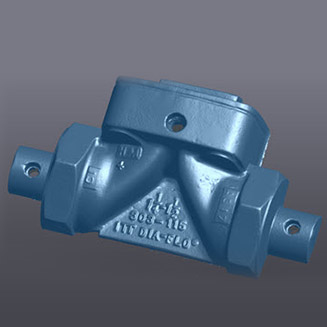
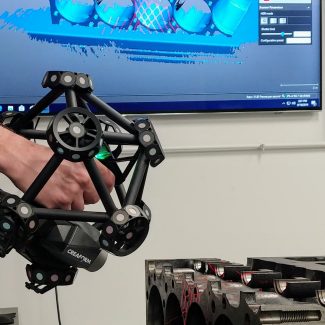
3D scanning captures millions of data points across an entire surface in minutes. There are several components to this. You need to check whether the dimensions are in spec, but there’s another part to this, as well. You need to make sure you see the whole part and understand how it compares to the original design, while identifying and addressing any discrepancies in measurements that arise. It’s the difference between checking a few pixels on a screen and seeing the full image.
Overlay Analysis Shows What’s Really Happening
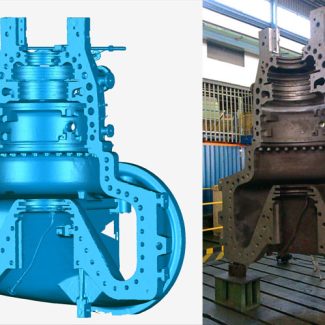
Once you’ve scanned a manufactured part, you can overlay that scan data directly onto the original CAD model. The software generates a color map showing exactly where the part deviates from design specifications and by how much. This visual feedback makes it obvious what’s happening and where attention is needed, instead of trying to piece together the story from scattered measurements.
Tracking Wear and Degradation
Sometimes you need to have tools that understand how parts are wearing over time. Whether the wear comes from production tooling or products returned from the field. 3D scanning provides a way to document the current state of worn components and compare them against original specifications or previous scans.
3D scanning allows you to see exactly where wear is occurring, what material has been lost, and where the issues are occurring within your design.
Identifying Systematic Production Issues
Sometimes parts specifications are consistently off in extremely subtle ways. When this happens, it represents a systematic problem rather than any sort of random variation. Maybe there’s slight distortion from heat, or perhaps a fixture isn’t holding parts quite right during manufacturing. It can be extremely hard to spot with point measurements.
When you’re scanning multiple parts and comparing them, patterns become obvious. There are several patterns to watch out for. This includes whether every part shows the same deviation in the same area or if the deviations are random, which would suggest another issue. Your goal is to get to the root cause of the issues so you can fix them for real.Supporting Corrective Actions
When quality problems show up you need to know exactly what’s wrong and how severe the issue is. It is helpful to keep in mind that 3D scan data provides clear documentation that supports corrective action decisions, such as if parts are out of spec or not. It is also possible to demonstrate to internal teams where process improvements are needed when analyzing the data.
The reason why this works is that the visual nature of scan data makes communication easier because everyone is looking at the same detailed information rather than interpreting lists of measurements differently.
Creating Quality Records
Documentation matters, especially in regulated industries or when customers require detailed quality records. 3D scan data provides comprehensive documentation that’s hard to argue with. You have a complete digital record of what was inspected and what the results showed.
These records can be stored long term and referenced years later if questions arise. They provide far more detail than traditional inspection reports while often taking less time to generate. When an audit comes around or a customer asks about quality verification, you’ve got solid evidence of your inspection processes.