Companies Can Reduce Downtime With Reverse Engineered Parts


Equipment downtime can be one of the most expensive problems that pop up in manufacturing. Every hour a production line sits idle, costs money in many different ways. For some operations, downtime costs can run into thousands of dollars per hour. Then, if the cause is a single failed part that’s no longer available, finding a solution becomes a major problem.
But, reverse engineering offers a practical solution to this problem. It can help get equipment back up and running even when original parts and documentation are nowhere to be found.
The Downtime Problem with Legacy Equipment
A large portion of manufacturing equipment stays in service for decades. Your operation could depend on a machine that was installed in the 1990s or even earlier. It might work fine for now, gets the job done, but something is bound to eventually break.
When a critical component fails on older equipment, finding a replacement is difficult. There are many different issues that pop up. The original manufacturer could be out of business by now. Spare parts inventories might have been exhausted years ago. The OEM might have stopped supporting the equipment, and now you are on your own and your production line is idle.
This is where reverse engineering becomes essential. Even without original drawings or available replacement parts, you can recreate the failed component and get back to production.
How Fast Reverse Engineering Actually Works
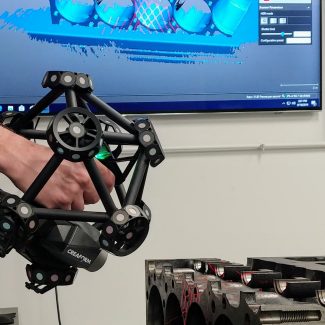
Modern reverse engineering moves much faster than most people realize. With 3D scanning technology, capturing the geometry of a failed part takes just a few hours.
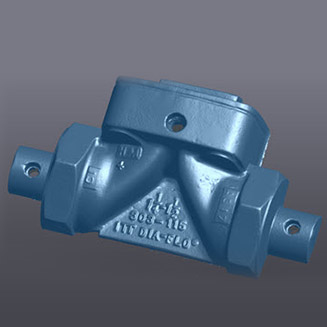
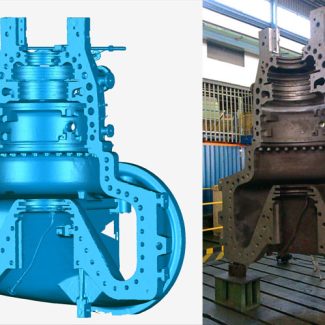
The process is, scan the broken or worn part to capture its geometry, process the scan data into a usable CAD model, and then manufacture the replacement. Depending on complexity and manufacturing method, you can go from broken parts to working having working replacements in a week or less. For production environments where downtime is bleeding money, this speed makes a real difference.
Working from Damaged or Worn Parts
You don’t need a perfect example to reverse engineer a replacement. Even a broken part can have enough information within it to recreate what it should look like. A worn part shows you the geometry plus information about wear patterns, and if you have multiple damaged pieces that can be analyzed together, reconstructing the original design is completely possible.
Experienced reverse engineering involves judgment about what is a part of original geometry and what reflects wear or damage. A scanned worn part won’t be turned into a replacement that matches the worn state. Instead, the engineering work involves recognizing what the part was originally and restoring it to that condition, sometimes with improvements to address whatever caused the failure.
Avoid Future Downtime Through Proactive Documentation
One of the smartest things companies can do is reverse engineer critical spare parts before they fail. Identify the components most likely to cause production stoppage if they break. Scan and model them now and store the digital files. When something does eventually fail, you’ve already done the engineering work and can move directly to manufacturing the replacement. This proactive approach makes this whole problem only a multi-day process. The scanning and modeling work that would have happened in panic mode after a failure is already done.
Manufacturing Options for Replacement Parts
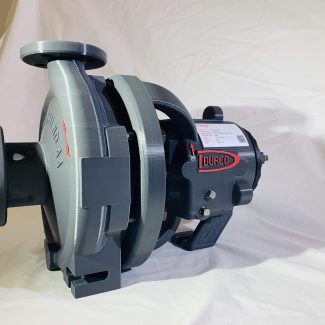
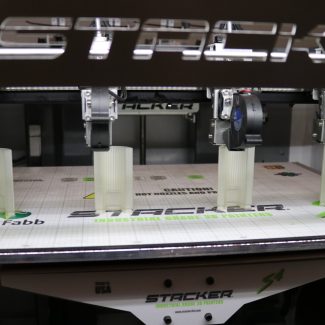
Once you have a digital model of the part you need, you have flexibility in how to manufacture it. For many applications, 3D printing gets you your replacement parts faster than any traditional method. For parts that need to be machined, having the digital model means machining can start immediately without the time needed to create programming from scratch.
The Bottom Line on Downtime Reduction
Downtime from unavailable parts doesn’t have to be a multi-week disaster anymore. With modern reverse engineering capabilities, complex parts can be recreated quickly and accurately. Whether you’re dealing with an emergency situation or planning ahead for parts that might eventually fail, having access to reverse engineering capability changes the equation significantly.
The companies running legacy equipment most effectively are the ones treating parts availability as a problem they can solve rather than depending on outside suppliers to solve it for them. Reverse engineering provides that capability, turning what used to be production stopping events into manageable inconveniences.