Why Reverse Engineering Relies on 3D Scans


Reverse engineering has become an important process across industries ranging from manufacturing and automotive to aerospace and energy. It can align with multiple company goals, such as replicate a discontinued part, improve an existing design, or analyze competitor products. It allows engineers to extract design intelligence from physical objects.
3D scanning is at the heart of this whole process because it provides highly accurate data, which makes the process efficient, reliable, and scalable. Here’s a look at why 3D scanning is so important to this process:
3D Scanning Allows Accurate Data Capture
Accurate data capture is an important piece of the puzzle for reverse engineering. The first step in reverse engineering is capturing the details of an existing object. Traditional manual measurements are time-consuming and prone to error, especially when dealing with complex geometries or small details.
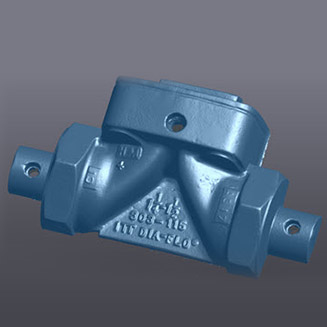
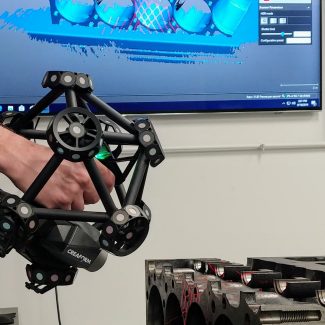
3D scanning solves this challenge by capturing millions of data points in seconds, creating a precise digital representation of the object’s surface. This data ensures engineers start with the most accurate foundation possible, which is important for achieving a true-to-form digital model. It’s the accuracy of 3D scanning that makes it so effective for reverse engineering. It takes a lot less time to complete a project now that we have tools like this.
Ability to Turn Scans into Usable Models
Once scan data is collected, it is processed into formats such as STL, STEP, or fully featured CAD models. These files allow engineers to manipulate the design, apply modifications, or integrate the part into larger assemblies.
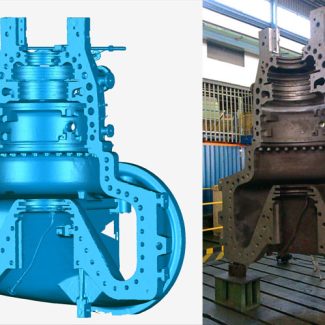
The conversion process is where 3D scanning proves its value. Instead of relying on guesswork, engineers have a clear digital map that matches the physical object down to fractions of a millimeter. This capability is especially important for legacy parts that may no longer have original design documentation or CAD files available.
Scanning is one thing, but being able to turn the scans into models is another. With such accurate data, this step of reverse engineering is a lot easier.
Different Industries Can Utilize 3D Scanning
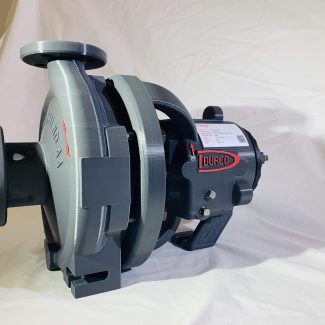
Reverse engineering powered by 3D scanning is widely used for practical applications. Manufacturers rely on it to replace worn or obsolete parts when original suppliers are unavailable.
Engineers use it to optimize designs, adding new features or improving efficiency. In quality control, overlay scans can identify wear patterns or deviations from original specifications.
Even in disaster recovery scenarios, large-scale 3D scans can document damaged equipment or facilities, allowing for accurate redesign and reconstruction. The adaptability of 3D scanning makes it a cornerstone of modern reverse engineering practices.
It’s true that older methods of reverse engineering involved painstaking, manual measurements and recreation. There is so much room for error doing it this way! Because of 3D scanning, it’s a lot more efficient now.
Do you have a reverse engineering project in mind? This is one of the things that we specialize in. We would love to hear from you to discuss your project.