Why Accurate Digital Models Matter in Modern Manufacturing


Modern manufacturing has been running on digital data in essentially every single step of the process. Because of this, a slight inaccuracy in your models towards the beginning can cascade through the entire manufacturing process, thus creating problems that compound. The role of accurate digital models has grown as manufacturing technologies have advanced. Understanding why this accuracy matters so much helps to clarify where to invest attention and resources.
Digital Models as the Single Source of Truth
In today’s manufacturing environments your digital model is the source of truth of what a part should be. It informs your 3D printing parameters and provides the basis for communication between everyone involved in production. When this model is accurate, everyone can work and rely on consistent information. And because of this, once a problem inevitably arises, they can easily be discussed against a common reference point. The model keeps everyone aligned throughout production opposed to different people working from different assumptions. When that happens, time gets wasted figuring out different understandings of what a part should be.
Direct Impact on Production Quality
The accuracy of digital models directly affects the quality of manufactured parts. CNC machines are going to produce exactly what the digital model tells them to produce, which unfortunately includes any errors in the model. If the model has a slight dimension issue, every part machined from it will have that same issue. If the model doesn’t accurately represent required tolerances, parts will be manufactured to inappropriate specifications.
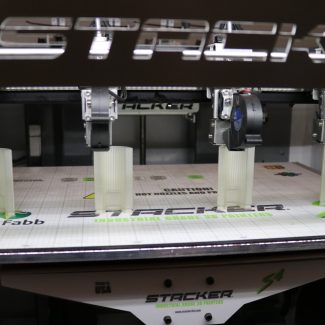
3D printing shows similar behavior and the printer reproduces the model exactly – flaws in the digital model included.Surface features, wall thicknesses, and geometric details all get reproduced based on what the model specifies. Inaccurate models produce inaccurate parts, and there’s no way to fix this problem downstream. The corrections need to happen at the source.
Enabling Multi-Party Collaboration
Manufacturing projects can involve many different parties doing different things. Design everyone needs to somehow work with the same information. Accurate digital models can help make this collaboration actually work properly. That’s because everyone can generally trust the data they’re looking at, rather than having to second guess every piece of information. When someone in different location reviews a digital model, they need confidence that what they’re seeing represents reality. If models contain errors or inconsistencies, there can be no trust..
Manufacturing Planning and Cost Estimation
Accurate digital models enable accurate manufacturing planning. Machine time can be estimated based on actual geometry. Material requirements can be calculated precisely. Tooling requirements can be identified specifically. Cost estimates based on this information tend to be reasonably accurate.
For contract manufacturing relationships specifically, model accuracy affects the entire pricing and delivery structure. Manufacturers price based on what they see in the model. If actual production requires more work than the model suggested, someone has to absorb that additional cost. Accurate models create fair, predictable business relationships.
Long Term Documentation Value
Digital models often become the long term documentation of a product’s design. They get referenced years later for maintenance, replacement parts, product updates, or historical purposes. This long term value depends on the models being accurate representations of what was actually built. Inaccurate models create problems. Someone looking at the model years later assumes that everything is correct, then discovers issues when they end up trying to use it.
Impact on Assembly Success
Products with multiple components depend on accurate models of how those components fit together. Assembly designs specify clearances, alignment features, mating surfaces, and countless other details that determine whether parts come together properly.
When individual component models are accurate but slightly off, tolerance stacking can cause assemblies that shouldn’t work in principle to actually work in practice. But when models contain real inaccuracies, assembly problems become inevitable. Components don’t align, features don’t mate, and clearances end up wrong. These problems get discovered during assembly, when they’re most expensive to address.
Accurate digital models aren’t nice to have in modern manufacturing, they are essential infrastructure. Investing in accuracy at the foundational modelling stage pays you back in every subsequent stage of the manufacturing process. Shortcuts at this stage end up just create problems that ripple through everything that follows.