How Integrated Engineering and Manufacturing Support Faster Problem Solving


Problems come up in essentially every single manufacturing project. Something always comes up. Whether a design that seemed perfect reveals issues during prototyping, or materials don’t behave the way expected. When you have production processes that create unexpected challenges, how quickly these problems get solved often determines whether projects succeed or struggle.
A solution is that when engineering and manufacturing capabilities exist under the same roof, problem solving happens dramatically faster. The reasons for this speed advantage are worth understanding, especially for companies evaluating how to structure their development and production relationships.
Problems Get Diagnosed by People Who Understand Both Sides
When a problem comes up during manufacturing, being able to understand the thing that is wrong might require looking at many different sources. Both the design and the production process could have many different problems that could have flown under the radar and been completely missed. Is the issue in how the part was designed? Is it in how manufacturing is being executed? Often the answer involves elements of multiple areas.
Teams that only understand one side of the equation tend to see problems through their limited lens. Engineering focused people assume manufacturing needs to change. Manufacturing focused people assume the design needs to change. The actual issue often falls somewhere in between, and identifying it accurately requires perspective on both.
Integrated teams are able to find and diagnose problems more accurately because they see the whole picture. They understand what the design was made to do, how the manufacturing is trying to execute it, and they can more easily figure out where the issue really lies.
Rapid Prototyping Enables Fast Iteration
Often the way to solve problems is to try different approaches and see what works. Modified design could solve the problem, or it could end up creating more new problems. Only actual testing tells you which solutions will work.
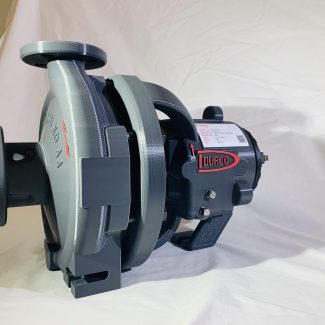
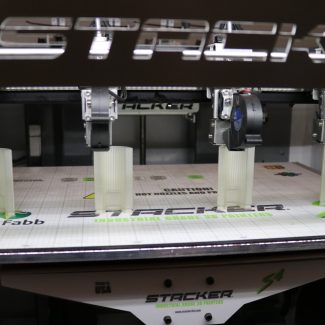
Rapid prototyping capabilities using 3D printing let integrated teams test solutions quickly. A modified design can be printed and evaluated within a day. Different variations can be compared side by side. What used to require expensive tooling changes just to test an idea now happens through iterative printing that costs relatively little and moves quickly.
This iteration capability changes what’s possible during problem solving. Rather than betting on one approach and hoping it works, teams can try out various approaches and select the one that works best. This enables them to assess real physical prototypes instead of having to make decisions on theoretical analysis. The problem solving becomes evidence based rather than speculation based.
Comprehensive Services Support Complete Solutions
Some problems require solutions that span multiple capabilities. Perhaps the fix is a design change, a change in manufacturing processes, and the creation of new fixtures. Each of these may need to come from a different vendor, and that can make coordination of a full solution more complex. The solution just falls into place when they’re all in one place.
If a part is not holding tolerances well, the solution might be to make a small change to the part design, or to make a new fixture to hold the part more securely during machining. In an integrated environment, all of these changes happen in coordination with each other, informed by understanding of how they’ll interact.
Trying to coordinate this same solution across multiple vendors is much harder. Each vendor addresses their piece without full understanding of the others. The changes might not work together well. Follow up iterations become necessary because the first attempt didn’t quite solve the problem. Integrated capabilities avoid this fragmentation.
Direct Communication Speeds Everything
When engineering and manufacturing are separated by organizational boundaries, communication becomes formal and often slow. Requests get made through defined channels. Responses take time to work their way back. Follow up questions require additional cycles of communication. Small issues that could be resolved in a conversation instead become extended email chains or formal meetings.
Integrated teams communicate directly and immediately. An engineer can walk over to production and see what’s happening firsthand. A production supervisor can ask the designer about intent and get an immediate answer. Questions get resolved as they arise instead of accumulating into problems that eventually require formal resolution processes.
And it’s not just a faster way to communicate. It also improves the quality of communication. Everyone involved can point at real parts, look at real setups, reference specific situations. Misunderstandings are rare as the communication is face to face with visual proof rather than descriptions filtered through multiple layers.
Comprehensive Capabilities Enable Creative Solutions
At times, the best way to solve a problem is to think outside the box. Perhaps the solution is not to fix the current process, but to take a totally different tack. Maybe a 3D printed part could replace a machined part. Or the problem could be altogether solved by some other way to assemble. Custom automation can address a long-standing problem.
This range of options often makes the difference between finding a good solution and settling for a workable compromise. When you have real choices about how to solve problems, the solutions tend to be better than when you’re constrained by what a single vendor can offer.
Faster Time to Resolution
When you add up all these advantages, the result is a way faster resolution to your problem. Issues that might have taken weeks to resolve across multiple vendors in the past could end up being solved in days when capabilities are integrated.
The speed this offers matters more and more, as products get more complex and market timelines get tighter. In competitive environments where getting to market first matters, spending weeks resolving problems that competitors solve in days creates significant disadvantages. Integrated engineering and manufacturing capabilities provide real competitive advantages in speed and effectiveness.